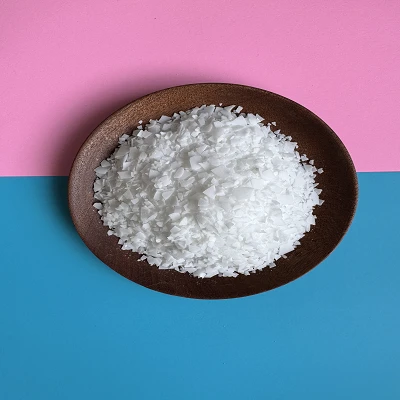
The design concept of titanate coupling agents is based on the essential need for interfacial modification.With the tunability of molecular structure as the core, it aims to improve interfacial bonding and optimize composite material performance by precisely matching the physicochemical properties of inorganic fillers and organic matrices. Its design is not a simple chemical synthesis, but a systematic molecular engineering approach integrating surface chemistry, polymer compatibility theory, and processing technology, aiming to construct functional molecules with high activity, broad compatibility, and a stable processing window.
The starting point of the design logic is a deep analysis of interfacial issues. Inorganic fillers often have surfaces rich in hydroxyl groups, metal oxides, or exposed ions, exhibiting strong polarity; while organic matrices such as resins and rubbers are mostly low or weakly polar, resulting in a significant interfacial energy difference and compatibility barrier between the two. The design of titanate coupling agents requires targeting this area to construct "amphiphilic bridging" molecules: centered on the titanium atom, these molecules form chemical bonds through coordination or condensation reactions between hydrolyzable alkoxy groups and hydroxyl groups on the filler surface; simultaneously, van der Waals forces or entanglement interactions are generated between long-chain fatty acid esters or modified organic groups and the matrix polymer chains, bridging polarity differences and reducing interfacial tension.
Modular design of the molecular structure is crucial for realizing this concept. The coordination environment of the titanium center determines its reactivity with the filler-by controlling the number of alkoxy groups (monokoxy, dialkoxy, or chelate structures) and steric hindrance, the hydrolysis rate and interfacial anchoring strength can be balanced, avoiding performance degradation caused by excessive hydrolysis. The design of organic side chains must match the matrix characteristics: for non-polar resins such as polyolefins, long-chain alkyl groups or polyolefin waxes are used to modify the chain segments to enhance compatibility; for polar engineering plastics or rubbers, polar groups such as ester groups and epoxy groups are introduced to improve interfacial interactions; for special functional requirements (such as heat resistance and flame retardancy), aromatic heterocyclic or heteroatom functional groups can be embedded to give the molecule additional thermal stability or synergistic effects.
The function-oriented synergistic design concept is also consistently applied. Modern titanate coupling agents not only pursue interfacial bonding but also need to consider processing adaptability-by controlling molecular weight and viscosity to reduce melt resistance; by introducing hydrolysis-resistant groups or stabilizing structures to improve durability under humid or high-temperature processing conditions. Furthermore, green design concepts drive the development of low-toxicity, low-volatility structures to reduce the impact on the environment and operators, and meet compliance requirements in sensitive fields such as food packaging and medical materials.
From laboratory molecular simulations to industrial application verification, the design philosophy of titanate coupling agents emphasizes closed-loop optimization of the "structure-performance-process" cycle: computer-aided design predicts molecular structure-property relationships, combined with small-scale and pilot-scale trials to verify the interface modification effects and processing feasibility, ultimately leading to molecular solutions suitable for large-scale production. This problem-oriented design logic, utilizing molecular engineering, enables titanate coupling agents to precisely adapt to multi-component filler systems (calcium carbonate, talc, wollastonite, etc.) and matrix materials (plastics, rubber, coatings), improving the overall performance of composite materials while providing molecular-level solutions for the lightweight, functional, and green development of the materials industry.
In summary, the design philosophy of titanate coupling agents focuses on interface problems, achieving precise control from molecular structure to macroscopic properties through modular molecular construction, functional synergistic optimization, and green considerations. Its essence lies in the deep integration of materials science and chemical engineering, providing a designable, predictable, and efficient path for interface modification technology.