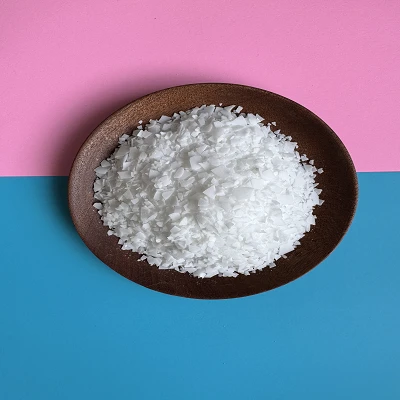
View Our Aluminate Coupling Agent SeriesWhen carrying out surface modification for inorganic fillers, multiple kinds of coupling agents are available for compounding manufacturers, and each category comes with exclusive structural features and suitable application scenarios. As a widely adopted surface modifier, aluminate coupling agents show obvious distinctions against silane coupling agents and titanate coupling agents in molecular framework, reaction mechanism, applicable material systems and final performance. Learning these distinctions guides technicians to select coupling agents matching the features of base resin and mineral fillers, so as to achieve ideal interfacial modification results in real production.
From the perspective of molecular structure, aluminate coupling agents take aluminum atoms as the core. They connect polar functional groups and non‑polar long alkyl segments through oxygen coordination bonds, forming amphiphilic molecules that bind both inorganic mineral surfaces and organic polymer chains. Silane coupling agents, by contrast, are built around silicon atoms. They contain one or more hydrolyzable alkoxy groups together with organic functional segments. These molecules form cross‑linked siloxane networks at the filler interface via hydrolysis and condensation reactions. Titanate coupling agents use titanium atoms as the central site. They usually carry multiple alkoxy groups and long‑chain fatty acid ester structures. They mainly coordinate with hydroxyl groups and active metal sites exposed on the surface of inorganic powder. Such structural differences decide how these modifiers form interfacial bonds and how stable the modified interface remains.
In terms of reaction mechanisms, aluminate coupling agents mostly form coordination bonds or strong hydrogen bonds with active sites on filler surfaces through their polar terminals. Their non‑polar segments can intertwine well with polymer molecular chains, building molecular bridges to cut interfacial tension and boost powder dispersion. This type of modifier is less sensitive to moisture interference. Silane coupling agents require hydrolysis inside humid or aqueous environments to condense with hydroxyl groups on filler surfaces and form stable covalent bonds. However, they are vulnerable to water; excessive moisture may trigger side reactions and deactivate the modifier. Titanate coupling agents form coordination complexes with hydroxyl and metal sites on filler surfaces, and they can displace adsorbed water on powder surfaces. This trait makes them fit for non‑aqueous processing systems, yet their bonding stability drops obviously under high temperature and high‑humidity working conditions.
Their suitable processing systems also vary greatly. Aluminate coupling agents enjoy good compatibility with polyolefin materials and many polar & non‑polar resins. They offer a wide processing window and are commonly used for plastic filler modification, rubber reinforcement and coating dispersion. Silane coupling agents perform best on glass fiber, silica and other hydroxyl‑rich fillers for epoxy and polyester composites, especially for scenarios requiring high‑strength covalent bonding. Titanate coupling agents work well in thermoplastic and thermosetting resins filled with non‑hydrous fillers like calcium carbonate and clay, and they can effectively lower melt viscosity of modified compounds.
When it comes to comprehensive performance, aluminate coupling agents feature low volatility, low toxicity and reliable thermal stability, with simple operation steps and minor negative influence on material mechanical strength. Silane coupling agents deliver high bonding strength but demand strict moisture control during storage and compounding. Titanate coupling agents create a prominent viscosity‑reducing effect, while their performance is easily affected by surrounding humidity and pH value.
To sum up, aluminate coupling agents bring unique advantages in structural stability, processing tolerance and environmental adaptability. They can complement silane and titanate coupling agents in reaction mechanisms and application fields. Correctly identifying and choosing the proper coupling agent helps composite manufacturers lift finished‑part performance and stabilize continuous processing.