



Technical breakthroughs and application value of aluminate coupling agents in the PVC industry In the field of polyvinyl chloride (PVC) material processing, balancing product performance, production costs, and processing technology has always been an important issue facing the industry. As an efficient interfacial modifier, aluminate coupling agents have brought innovative solutions to the PVC industry, demonstrating unique value in improving filler dispersion, enhancing product performance, and reducing production costs.
I. Technical Principle:
The molecular structure of the aluminate coupling agent, which builds a stable PVC-filler interface, possesses unique amphiphilic characteristics. The aluminate group at one end can form stable chemical bonds with active groups on the surface of inorganic fillers such as calcium carbonate and titanium dioxide. The organic long chain at the other end exhibits good compatibility with the PVC molecular chain. This special structure establishes a strong chemical connection between the filler and the PVC matrix.
During the processing of PVC products, aluminate coupling agents exert their effects through three key technical mechanisms:
Surface chemical modification mechanism:
Altering the surface properties of fillers to enhance interfacial compatibility with PVC resin;
dispersion and stability control mechanism:
Forming a steric hindrance effect to prevent agglomeration of fillers during processing;
interfacial mechanical enhancement mechanism:
Establishing stable chemical connections to improve the mechanical properties of composites.
II. Professional and Technical Advantages Applied in the PVC Industry

1. Significantly Enhancing the Mechanical Properties of Products
In PVC formulations, untreated fillers are prone to becoming stress concentration points. Aluminate coupling agents transform fillers from "weak spots" to "strengthening points" by enhancing interfacial bonding. Actual application data shows that PVC products modified with aluminate coupling agents can experience a 25%-40% increase in tensile strength, a 30%-50% improvement in impact strength, and a 20%-35% enhancement in bending strength, significantly improving the durability and reliability of products such as profiles and pipes.
2. Optimize processing performance and production efficiency
PVC processing demands high rheological properties of the melt. After the aluminate coupling agent improves the dispersion state of the filler, the melt's fluidity is significantly enhanced. Specifically, the extrusion pressure decreases by 15%-25%, and energy consumption is correspondingly reduced; the stability of product molding is improved, and the surface quality is significantly enhanced; production efficiency is increased by 18%-30%, making it particularly suitable for high-speed extrusion and injection molding processes.


3. Achieving high filling and economic optimization
Aluminate coupling agents create conditions for high-proportion filling by improving interfacial compatibility. Industry practice shows that the optimal addition amount of aluminate coupling agents for PVC is controlled between 5% and 10% of the density, which allows the safe increase of filler addition, such as calcium carbonate, to 40% to 60%. While maintaining product performance, it effectively reduces raw material costs by 25% to 40%.
4. Improve the surface quality and stability of the product
The modified filler is more evenly dispersed in the PVC matrix, resulting in a smoother and flatter product surface with a 20%-35% increase in glossiness and a 30%-50% reduction in surface defects. At the same time, the dimensional stability, heat resistance, and weather resistance of the product are also significantly improved.
5. Enhance the potential of functionalized applications
The surface of the filler treated with coupling agents provides a better synergistic platform for other functional additives. When used in combination with heat stabilizers, lubricants, flame retardants, etc., it can produce a significant synergistic effect, providing technical support for the development of high-performance PVC products.
III. Professional Technical Support:
As a veteran manufacturer of aluminate coupling agents, Shandong Chunqian New Materials Co., Ltd. has established a comprehensive technical service and supply guarantee system based on years of production and sales experience.
IV. Practical Application
Effect Verification A PVC profile manufacturing enterprise originally faced issues such as insufficient product strength and rough surface when using ordinary calcium carbonate as a filler. After introducing the aluminate coupling agent provided by Chunqian New Materials (with an addition amount of 8% of the filler mass), the calcium carbonate filling amount was increased from 35% to 50%. Simultaneously, the impact strength of the product increased by 45%, the tensile strength increased by 32%, the surface gloss improved by 40%, the overall cost decreased by 30%, and the market competitiveness of the product significantly enhanced.
V. Application Fields and Development Trends The application of aluminate coupling agents in the PVC industry covers multiple fields:
Building profiles: Improve the mechanical properties and weather resistance of profiles;
Pipe and fittings: Enhance the ring stiffness and impact resistance of pipes;
Packaging materials: Improve the transparency and mechanical properties of films;
▲ Decorative materials: enhance the surface quality and decorative effect of products.
As the PVC industry evolves towards higher performance and environmental friendliness, aluminate coupling agents have broad application prospects in emerging fields such as lead-free stabilizer systems and environmentally friendly plasticizer systems.
VI. Scientific application suggestions:
Select the appropriate coupling agent model based on the type of PVC product;
Determine the optimal addition amount through experimentation, and optimize within the range of 5%-10%;
Strictly control the processing temperature and mixing time;
Pay attention to the compatibility with stabilizers, lubricants, and other additives;
Product Market Application
1.For PP Non‑woven Fabric Filler Masterbatch

Modified calcium carbonate delivers excellent dispersion toeliminate white spots, fish eyes and granular defects on film surfaces. It optimizes interfacial bonding between powder and resin to improve film toughness and tensile strength and resist brittle fracture under high loading.It reduces melt viscosity to suit high‑speed cast film production with stable die pressure. uniform film thickness and extended screen‑changing cycles. It features no precipitation or migration and will not affect corona treatment, printing or lamination. With controllable haze and fine appearance, it allows higher calcium carbonate dosage to cut costs effectively.
2.For PE Blown Film Filler Masterbatch

It improves calcium carbonate dispersion to eliminate white spots and crystal spots, strengthens bonding between powder and resin to boost film toughness and prevent film rupture. It lowers melt resistance for stable blown‑film processing and uniform discharging. No precipitation or blooming occurs and it does not interfere with printing and lamination. A higher filling ratio can be adopted to reduce costs and raise production efficiency.
3.For Nano-Calcium Masterbatch
It activates nano‑calcium carbonate with waterproof and moisture‑proof properties to break up agglomeration. It achieves uniform dispersion without white spots and reduces oil absorption to save resin consumption and cut costs while improving compatibility between powder and plastics. It enhances toughness and tensile strength, optimizes flowability for smooth extrusion processing. It causes no precipitation or yellowing and delivers excellent appearance of finished products.

4.For PP Hollow Sheet Filler Masterbatch
It optimizes calcium carbonate dispersion to eliminate
agglomerated white spots, strengthens bonding
between filler and resin to improve sheet strength
and impact resistance while preventing brittleness.
It enhances plasticizing fluidity to ensure stable
extrusion and smooth sheet surfaces, reduces
moisture-induced deformation, and enables
cost reduction via high filling loading with no
precipitation and superior weather resistance.

5.For PE Drawing Filler Masterbatch

It optimizes calcium carbonate dispersion to reduce
filament breakage and fuzz,improves tensile strength
and toughness of filaments for excellent stretch resistance
and anti‑brittleness. It enhances plasticizing fluidity to
stabilize the drawing process and prevent die blocking.
Cost reduction is realizedvia high filling loading,
no precipitation occurs, and finished fabrics are smooth
and durable.
6.For Transparent (Glauber Salt) Masterbatch

It coats Glauber salt particles to lower moisture
absorption and prevent caking, improves powder
dispersion without whitening or haze to retain high
transparency. It boosts compatibility between powder
and resin to strengthen product toughness and reduce
melt viscosity for smooth processing. High filling ratio
helps cut costs, and no precipitation will impair product
transparency.
7.For PP Non‑woven Fabric Filler Masterbatch
It improves calcium carbonate dispersion to eliminate filament breakage and white spots, strengthens bonding between filler and resin for uniform and soft fabric texture. It optimizes melt fluidity to stabilize spinning production and reduce screen blocking. No precipitation occurs under high filling loading to lower production costs.

8.Applied in White Masterbatch & Color Masterbatch

It enhances the dispersibility of pigments and powders to eliminate pigment agglomeration, improves compatibility with resins for even, bright coloring. It optimizes processing fluidity to ensure smooth extrusion, reduces additive precipitation, boosts the stability and weather resistance of masterbatches and cuts formulation costs.
9.For Talc Powder Filler Masterbatch
It activates talc powder to break agglomeration and achieve uniform dispersion, improves compatibility between powder and resin, enhances product rigidity and heat resistance, lowers oil absorption rate and allows higher filling dosage to reduce costs. It optimizes processing fluidity for smooth extrusion and injection molding without precipitation, delivering smooth product surfaces and stable dimensional accuracy.

10.For PP Drawing Filler Masterbatch
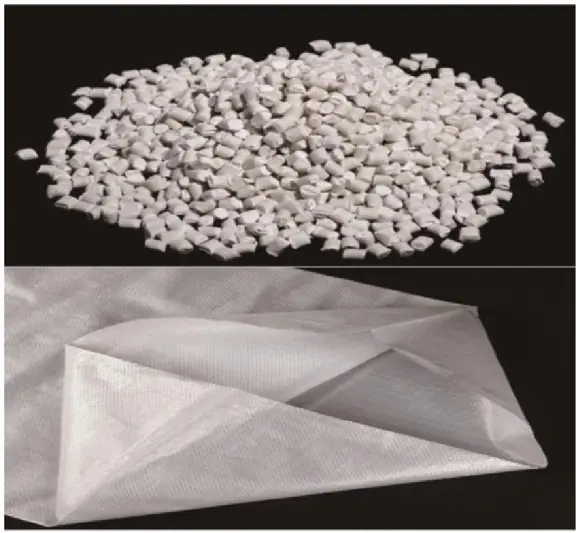
It optimizes calcium carbonate dispersion to avoid
filament breakage and fuzz, increases single filament
strength and toughness for excellent tensile
performance. It improves plasticizing fluidity
to stabilize production and reduce die blocking,
supports high filling with no precipitation for
effective cost reduction.
11.For Injection‑molding Filler Masterbatch
It activates inorganic powder to prevent agglomeration
and realize uniform dispersion, improves powder-resin
compatibility and the toughness of injection-molded
products. It reduces melt viscosity to accelerate mold
filling and demolding, diminishes silver streaks and
white spots for sleek product appearance. Products
stay non-brittle even at high filling loading to
ensure stable production and cost savings.

12.For PP Calcium‑plastic Boards
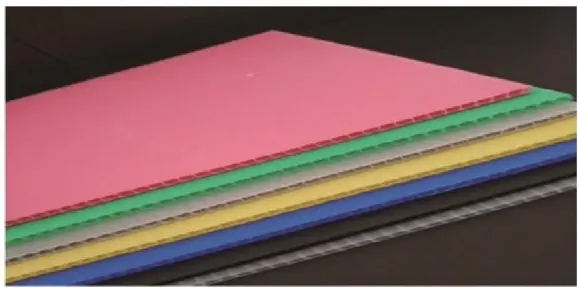
It activates calcium carbonate with hydrophobic
and moisture-proof properties to avoid foaming
caused by moisture absorption, achieves uniform
powder dispersion for particle-free, pit-free board
surfaces. It enhances compatibility between calcium
powder and resin to boost board toughness and
anti-brittleness, reduces melt viscosity for smooth
extrusion and higher production efficiency. Stable
performance under high filling loading lowers
production costs with no precipitation or discoloration.
13.For PVC Sheets
It optimizes calcium carbonate dispersion to deliver smooth sheet surfaces free of white spots,enhances the strength and toughness of finished products to reduce brittle cracking It improves processing fluidity for stable extrusion performance, mitigates moisture‑induced deformation, boosts weather resistance and enables cost reduction via high filling loading.
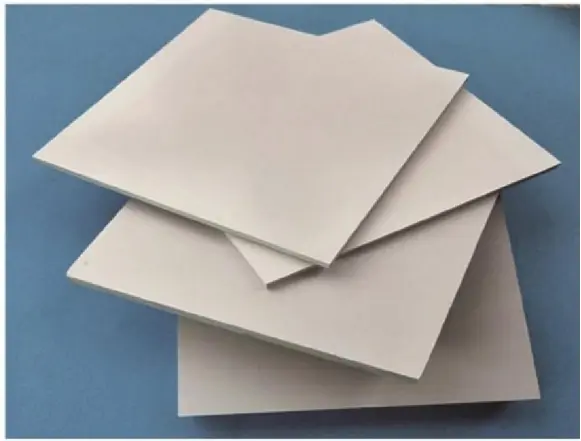
14.For PE/PP Sheets
It promotes filler dispersion to produce fine sheet surfaces without granular defects, strengthens interfacial bonding to improve mechanical strength and impact resistance. It optimizes extrusion fluidity to stabilize production, lowers moisture‑caused deformation and realizes cost savings under high filling conditions.

15.For PP Filled Ropes
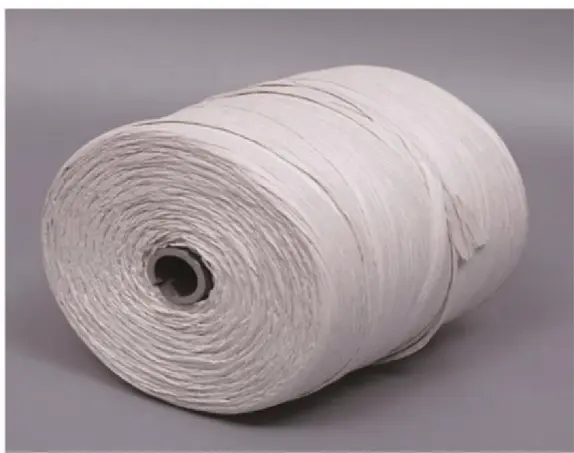
It improves calcium carbonate dispersion to reduce filament breakage, raises the tensile strength and flexibility of ropes for excellent wear resistance and anti‑brittleness. It optimizes spinning processability, supports high filling loading without precipitation to cut production costs.
16.Applied in PVC Pipes
It improves calcium carbonate dispersion to obtain smooth and defect-free inner pipe walls, enhances pipe strength, impact resistance and toughness, optimizes processing fluidity to ensure stable extrusion. It reduces water absorption and deformation degree, and achieves cost reduction through high filling loading.
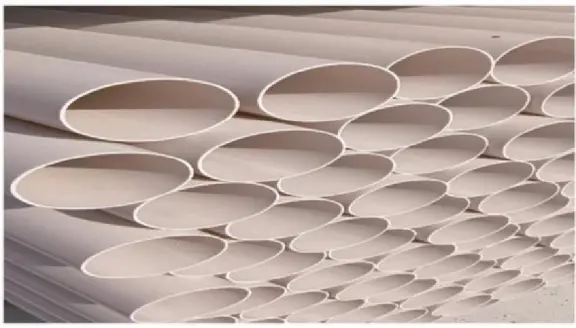
17.For PE/PP Pipes

It optimizes filler dispersion for flawless smooth
pipe walls, improves pipe toughness and ring stiffness
to resist high pressure and cracking. It boosts processing
fluidity for steady extrusion, lowers water absorption
rate and structural deformation under high filling dosage
to realize effective cost control.
18.For PVC & PE Cable Compounds
It enhances dispersion of inorganic fillers and reduces
system viscosity for smooth processing. It strengthens
interfacial bonding to upgrade mechanical properties
and heat resistance, cuts moisture absorption to maintain
stable insulation performance without precipitation, and
adapts to high‑filling cost‑saving production.

19.For PE Sheath Compounds

It improves inorganic filler dispersion and processing
fluidity,strengthens material toughness, wear resistance
and anti-aging performance. It reduces moisture
absorption to keep stable insulation with no
precipitation, supporting cost reduction via high filling loading.

Establish a comprehensive quality control system to ensure product stability.
Aluminate coupling agents play an increasingly important role in the PVC industry through their scientific interface modification technology. They not only effectively solve the technical challenges brought by high filling, but also provide a practical solution for the industry to reduce costs and increase efficiency. Shandong Chunqian New Material Co., Ltd., as a professional manufacturer, has become a reliable partner for PVC enterprises in technological innovation and product upgrading, thanks to its timely supply service, guaranteed after-sales commitment, and abundant storage capacity, combined with years of technical accumulation from production and sales experience. With the continuous advancement of material technology, aluminate coupling agents will surely play a more crucial role in promoting the high-quality development of the PVC industry.
Hot Tags: aluminate coupling agent for pvc, China aluminate coupling agent for pvc manufacturers, suppliers, factory, Aluminate Coupling Agent for Color Masterbatch, Aluminum ester coupling agent for polyethylene wire drawing masterbatch, Aluminate Coupling Agent for Colored Masterbatch, Aluminate Coupling Agent for Polypropylene Filament Filling Material, Aluminum ester coupling agent for casting film filling material, Aluminate Coupling Agent for Talc Filler


